

From Sanitary Surveys to Safer Rural Water Supply
In many rural communities, drinking water sources are vulnerable to contamination, and this results in significant public health risks. A World Health Organisation (WHO) led assessment estimated that in 2019 alone, inadequate water, sanitation, and hygiene (WASH) contributed to about 1.40 million deaths and 73.9 million disability adjusted life years from diseases such as diarrhoea, respiratory infections, undernutrition, and soil-transmitted helminths (Wolf et al., 2023). This highlights the urgent need for practical measures that improve water quality and strengthen WASH systems in line with SDG 6.3, 6.2, and 6. B (UN, 2026).
One effective approach is the sanitary survey. It is a structured on-site assessment of water sources, infrastructure, operations, and management used to identify risks and deficiencies, particularly in drinking-water supplies (US EPA, 2026). Its purpose is to identify any deficiencies that might adversely impact a public water system’s ability to provide a safe, reliable water supply.
Eight Areas of a Sanitary Survey
| Area | Description |
| Source | Reviews a raw water source’s features for the purposes of preventing potential contamination or water quality degradation. |
| Treatment | Identifies existing or potential sanitary risks by evaluating the design, operation, maintenance and management of water treatment plants. |
| Distribution System | Ensures water systems have qualified professionals who meet all applicable operator certification requirements. |
| Finished Water Storage | Reviews the design and major components of finished water storage facilities in order to prevent water quality problems from arising during storage. |
| Pumps | Reviews the design and use of water supply pumping facilities in order to determine overall reliability and identify potential sanitary risks. |
| Monitoring & Reporting | Determines water system conformance with regulatory requirements through the review of water quality monitoring plans and system records; verifies data reported to the regulatory agency are consistent with system records. |
| Management & Operation | Evaluates water system performance in terms of management and operation, including its long-term viability in meeting water quality goals. |
| Operator Compliance | Ensures water systems have qualified professionals that meet all applicable operator certification requirements. |
Modified from (US EPA, 2026)
CARES WASH Services
Coastal and Reclamation Engineering Services (CARES) Group is an international, multi-disciplinary environmental, engineering, water resources and maritime consultancy that brings together a team of highly experienced individuals, many of whom have had over 30 years in the industry. At CARES Group, we support sustainable sanitation through a range of expert services tailored to the client’s needs, starting with sanitary surveys and leading on to water quality testing, feasibility studies, detailed treatment and distribution design, and wastewater treatment and disposal.
CARES work for an international mining company in Liberia is an example of how sanitary surveys were used to establish a water quality baseline and monitoring schedule for assessment of the water supply systems, including the raw water sources, storage, treatment, and distribution systems. This project involved work at the Buchanan and Yekepa, as follows:
- Sanitary surveys to identify potential pollution sources and recommend remedial measures
- Development of a water safety and testing plan aligned with WHO and national standards,
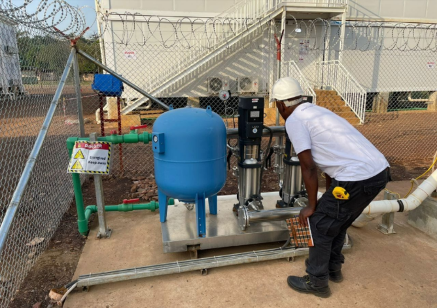
- Design reviews and assessment of water infrastructure and treatment processes – We recommended changes to the treatment process, to minimise power and chemical usage, and adjusted the infrastructure to enable more efficient monitoring.
- For new labour camps along the railway route, between Yekepa and Buchanan, we assisted the contractors in charge of the rehabilitation to design abstraction, treatment and storage systems to supply portable water to the labour teams from wells and river sources – We also ensured that the supplies were certified by the regulator; EPA Liberia.
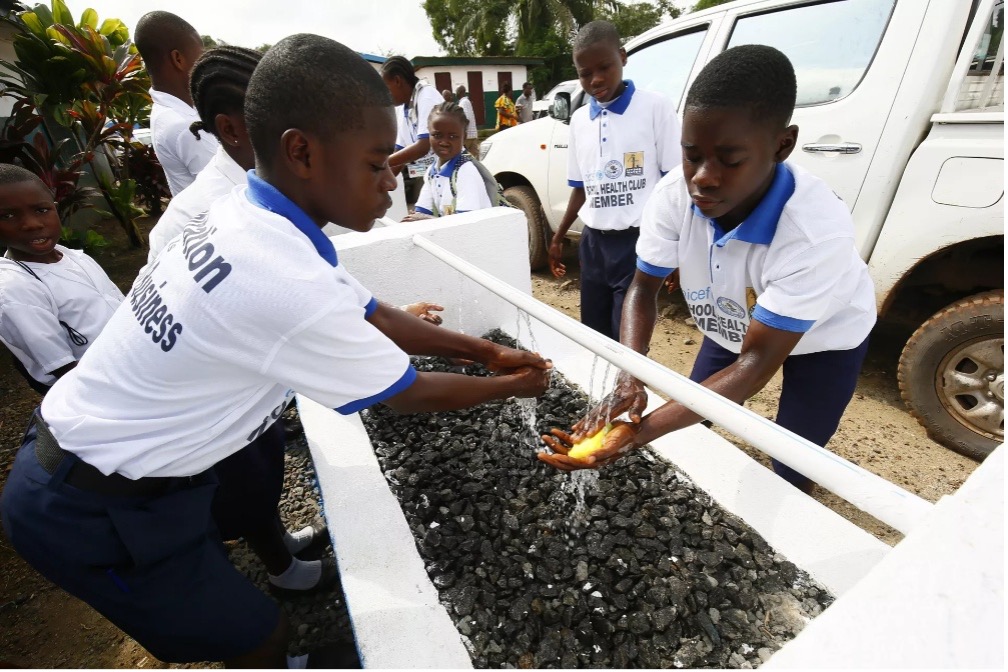
Similarly, CARES have undertaken services for UNICEF at 120 rural schools in Liberia, where their programmes have provided improved water supplies, sanitation infrastructure and hygiene awareness for pupils and teachers. CARES carried out sanitary surveys of the existing infrastructure and planned interventions, including baseline data gathering, stakeholder consultation, technical and environmental assessment, and institutional capacity building with the school sanitation committees. The team assessed the appropriateness of these institutions with respect to environmental protection mechanisms and helped build local capacity. Key issues with the existing infrastructure were identified, and the environmental and health impacts that may result from the proposed activities under the WASH in Schools project were assessed. Finally, CARES made recommendations for appropriate remedial measures to avoid, mitigate, and compensate for any adverse impacts and provided management and monitoring plans for implementation.
Notes: :
https://www.nature.com/articles/s41545-020-00093-z
https://www.sciencedirect.com/science/article/abs/pii/S0048969720307476
https://pmc.ncbi.nlm.nih.gov/articles/PMC5334706
References
Wolf, J., Johnston, R., Ambelu, A. & Arnold, B., 2023. Burden of disease attributable to unsafe drinking water, sanitation, and hygiene in domestic settings: a global analysis for selected adverse health outcomes. The Lancet, 401(10393), pp. P2060-2071.
UN, 2026. un.org. [Online] Available at: https://www.un.org/sustainabledevelopment/water-and-sanitation/[Accessed February 2026].
US EPA, 2026. epa.gov. [Online] Available at: https://www.epa.gov/dwreginfo/sanitary-surveys[Accessed February 2026].